
April Fool’s!
And here’s the backstory to our T S Eliot cheese joke, which fooled a lot of people. Every Berkshire April Fool’s Day letter has linked to a page with the backstory, but every year we have excited or irate readers who don’t click the link or notice the date. (Admittedly, it’s hard to get the timing right when we have readers all over the world.)
And some of the old stories are linked below. Those on artificial intelligence – the first was published in 2005 – are seeming a bit too close to reality today, and writing funny pieces on China has become more difficult. But we’ll keep trying!
The T S Eliot Cheese Marketing Campaign

There is no cheese marketing campaign, but T S Eliot did love cheese and wrote a much-quoted letter about Stilton to the editor of The Times in 1935. He frequently mentioned cheese in letters to friends, something that surprised and charmed Karen Christensen, CEO of Berkshire Publishing, when she was working on the Eliot letters in London in the late 1980s. This story is a spin-off from our April Fool’s story of 2013.
Karen worked with Eliot’s widow Valerie. Valerie herself was nearly 40 years younger than Eliot and became his literary executor, known for her zeal in protecting the Eliot legacy. Karen’s memoir “Dear Mrs. Eliot” was the cover story of the Guardian Review in January 2005. Valerie Eliot died at 86, on 8 November 2012. Her death led to much speculation that there would be much greater access to the Eliot papers. That’s what inspired this piece of April tomfoolery in 2013, and since there was a dramatic release of a trove of letters by Eliot to Emily Hale in January 2020, we decided to bring the story up to date.

Below are a few notes for those who love literary stories, and fine cheese.
culture is a real magazine about cheese. Eliot’s best-known prose book is probably his Notes Towards a Definition of Culture, irresistible as a subtitle for our mock cheese journal. East Coker is not the name of a cheese but the title of one of Eliot’s poems, and a village in Somerset, England, where Eliot’s ashes were placed after his death in 1965. The other cheeses listed on the cover – Stilton, Wensleydale, Lancashire – are real.
Eliot did not write to Emily Hale about a cheese called Burnt Norton and the revelations about their intimate relationship have no connection, as far as we know, to his interest in cheese. He did, however, later thank Hale for a Christmas package of cheese. Scholars are sure to wonder what type of cheese might have gone into a package sent from 1940s Massachusetts to post-War London, and whether in fact Eliot the connoisseur would have deigned to eat it. Here are links to more information about Eliot and cheese:
- “For the love of cheese” from the T S Eliot Foundation
- Eliot on Stilton
- Eliot on tolerable American cheese
There really was a dramatic release of 1,100 T S Eliot letters at Princeton in January 2020. This was covered in all the major newspapers and a BBC documentary is in progress. The International T S Eliot Society commissioned a day by day blog post from the archives, available here: Reports from the Emily Hale Archive.

Berkshire’s Karen Christensen was there, too, and has written two posts about the Hale letters: First Look at the Sealed Collection of Letters from T S Eliot to Emily Hale and The Princeton story continued.
We couldn’t resist creating a fashion ad, showing Eliot looking dapper in a suit and hat, after reading that Virginia Woolf had mocked his excessive formality by calling him the man in the four-piece suit.
While Eliot did call for the formation of a Society for the Preservation of Ancient Cheeses, we have not prepared a quiz on ancient cheeses. Apologies!
Our original 2013 April Fool’s story focused on marketing cheese to China. In fact, Chinese cheese exists, and the demand for dairy products is growing in China. Fuchsia Dunlop wrote about this for BBC Magazine: “A taste of ‘milk cake’ in Yunnan,” and here’s a story about UK dairy promotion in China. Miranda Brown, at the University of Michigan, is a great expert on cheese and milk products in China. Follow her @Dong_Muda.
We also gave a shout out to an amazing cheese shop, Rubiner’s, in Great Barrington, Massachusetts, where Berkshire Publishing is based. We remain certain that Eliot would have been happy in Rubiner’s selection and nurturing, and that he would have appreciated a cheese they had on offer: Stitchelton (pictured left), the first raw-milk Stilton-type “farmstead” cheese to be made in Britain since World War II.
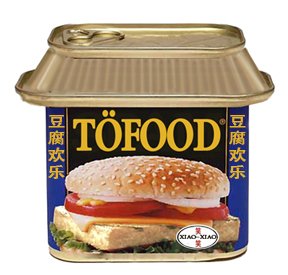
Was Töfood töo convincing?
I'm rather disappointed. People seem to have believed my

The “Rise of China” Takes on New Meaning
1 April 2011, Great Barrington, Massachusetts—As concern about China’s

Chinese Firm To Build Friendship Wall
A look at the (humorous) proposal for a trilingual 'Friendship Wall' between the US and Mexico, drawing parallels to the Great Wall of China. Happy April Fools!

T S Eliot Estate $40 million cheese deal
London, UK: T S Eliot marketing deal sets stage
Berkshire’s Move to Seattle – NOT!
I’ve received dozens of congratulatory emails in response to my
Chinese app improves relationships
April fool! In spite of all the promise of artificial